
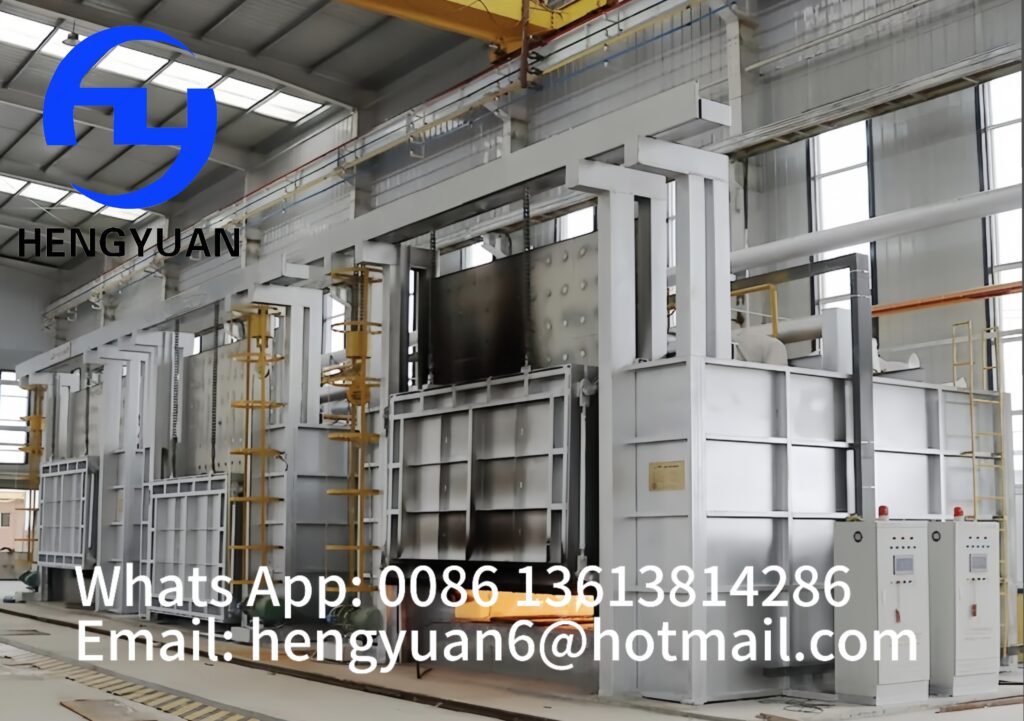
In global steel production, oxidation scaling in reheating furnaces is one of the most costly hidden issues that directly erodes profits, reduces competitiveness, and limits access to high-end markets. It causes massive material waste, increases fuel consumption, shortens furnace life, and creates serious surface defects—all of which weaken product quality and block you from winning long-term contracts in automotive, pipeline, home appliance, and high-end manufacturing sectors.
For steel mills, rolling mills, and downstream fabricators worldwide, controlling high-temperature oxidation scaling is no longer optional—it is essential. Today, I want to share fully proven, field-verified strategies that help our global customers dramatically reduce scaling loss, improve steel quality, lower operational costs, and strengthen their position in the global market.
🔍 What Drives Oxidation Scaling?
Scaling is unavoidable during slab reheating, but its severity can be precisely controlled by managing four core factors:

1. Temperature
Oxidation speed rises exponentially when temperature exceeds 1150°C. At 1300°C, scaling loss can be more than twice as high as at 1150°C. Every extra 10 minutes of soaking time at 1100°C increases scaling by 0.3–0.5%.
High-temperature oxidation also produces thick, loose oxide scale that easily breaks off, causing damage to rollers, water nozzles, and hearth components during rolling.
2. Furnace Atmosphere
When the air excess ratio > 1.2, oxidizing gases (O₂, CO₂, H₂O) increase sharply, accelerating scaling by 40% or more.
By reducing oxygen partial pressure from 4% to 0.1%, scaling loss of 08A steel can be reduced by 70%.
Unstable furnace pressure, poor sealing, and uneven flame distribution all create local oxidation hotspots.
3. Slab Surface Condition
A 10μm increase in surface roughness (Ra) expands contact area with oxidizing gases by 15–20%, directly worsening scaling.
Pre-existing rust, scale, oil, or scars on the slab surface form oxidation nucleation points that accelerate high-temperature corrosion.
Poor surface quality before heating will inevitably lead to more defects after rolling.
4. Steel Grade
Low-carbon steel has the fastest oxidation rate due to its high iron diffusion rate.
Alloying elements such as Cr, Si, Al form dense protective oxide layers. Adding 1% Cr can reduce the scaling rate by 0.2%.
Different steel grades require different heating curves and atmosphere control strategies to minimize scaling.

📊 Real Economic Impact
For a 2,000,000 TPY steel plant, a scaling rate of 1.5% equals 30,000 tons of wasted steel—nearly $17 million in annual financial loss.
Reducing scaling from 1.5% to below 1.0% directly saves millions of dollars per year.
🛠️ Our Proven Solutions to Control Scaling
We provide global customers with full-process, customized solutions that integrate design, equipment, process, and operation:
1. Optimized Heating Process
- Precision Temperature Monitoring: High-accuracy pyrometers track slab entry temperature in real time, feeding data to our Level 2 furnace control system for fully closed-loop temperature regulation.
- Targeted Temperature Reduction: For low-carbon steel, we lower the final intermediate slab target temperature by 20°C while ensuring uniformity, reducing high-temperature oxidation without affecting rolling performance.
- Rolling Rhythm Matching: We simulate and optimize rolling passes (e.g., 3+3 vs. 5+3 passes) to shorten in-furnace time, reduce soaking duration, and lower soaking zone temperatures by 15°C.
- Segmented Heating Curves: We design customized heating patterns for different steel grades to avoid long exposure at critical oxidation temperatures.
2. Advanced Combustion & Atmosphere Control
- Smart Combustion Calibration: Our proprietary system auto-calculates optimal air/gas ratios, calibrating every burner to maintain a stable, low-oxygen, uniform atmosphere.
- Precision Valve Control: We calibrate all furnace control valves to eliminate gas/air leakage, ensuring stable oxygen levels and avoiding local over‑oxidation.
- CFD-Optimized Burner Angles: Using computational fluid dynamics simulation, we adjust burner angles to distribute flame evenly, eliminating hotspots and reducing uneven scaling.
- Closed-Loop Oxygen Control: Real-time oxygen monitoring keeps the furnace in a weakly reducing atmosphere, greatly suppressing oxidation.
3. Slab Surface Pre-Treatment
- Mechanical + Chemical Descaling: We use shot blasting or high-pressure water cleaning to remove pre-existing scale, followed by chemical cleaning to eliminate rust and oil, creating a smooth, clean surface that resists oxidation.
- Anti-Oxidation Coatings: For high-value steel grades (automotive, pipeline, electrical steel), we apply high-temperature protective coatings that isolate the slab from oxidizing gases without affecting rolling or internal properties.
- Surface Quality Inspection: We recommend online surface inspection before reheating to identify and segregate slabs with excessive rust or damage.

4. Furnace Operation & Maintenance Upgrade
- Enhanced Sealing System: We upgrade furnace doors, water seals, hearth seals, and roll holes to prevent cold air influx during charging/discharging.
- Micro-Positive Pressure Control: We stabilize furnace pressure at 10–30Pa to prevent heat loss and oxygen intrusion.
- Furnace Wall & Refractory Maintenance: Good refractory condition reduces heat loss and keeps temperature distribution stable.
- Data-Driven Monitoring System: We provide a real-time scaling analysis dashboard to track loss rates, compare batches, and identify continuous optimization opportunities.
5. Professional Training & On-Site Support
- We provide systematic operation training for furnace masters, engineers, and production managers.
- We deliver on-site guidance to optimize heating parameters, air-fuel ratio, furnace pressure, and operating rhythm.
- We help you build standardized operating procedures (SOPs) for long-term stable effect.
💼 How This Benefits Your Business
Our solutions bring measurable, sustainable improvements for steel producers worldwide:
✅ Reduce Material Loss
Cut scaling rate from 1.5% to <1.0%, saving 10,000 tons of steel per year for a 2Mt mill.
✅ Improve Steel Quality
Reduce surface defects by 30%+, improve mechanical properties, and increase yield by 0.5–1.0%.
Your products will easily meet requirements for automotive, pipeline, appliance, and precision manufacturing.
✅ Lower Production Costs
Cut fuel consumption by 5–10% and reduce rework, repair, and rejection costs.
This lowers per-ton steel costs by $1.5–$3, directly improving margins.
✅ Extend Furnace Service Life
Less scale buildup means less damage to rollers, nozzles, and refractory—greatly extending furnace lifetime.
✅ Win Global High-Value Clients
Meet strict ASTM, JIS, EN standards.
Higher purity, better surface quality, and stable performance help you enter high-end supply chains.

🌍 Let’s Partner to Optimize Your Furnace Operations
Whether you are:
- Building a new greenfield steel mill
- Upgrading an old reheating furnace
- Improving product quality for high-end markets
- Cutting costs and increasing yield under high energy prices
Our expertise in reheating furnace oxidation control can help you achieve real, measurable results.
We have helped clients across Asia, the Middle East, Africa, and South America reduce scaling loss by 30%+ while significantly improving product quality and profitability.
If you’re ready to turn your reheating furnace from a cost center into a profit center, let’s connect and discuss a customized solution! 📩
WhatsApp: 0086 13613814286
Email: hengyuan6@hotmail.com