
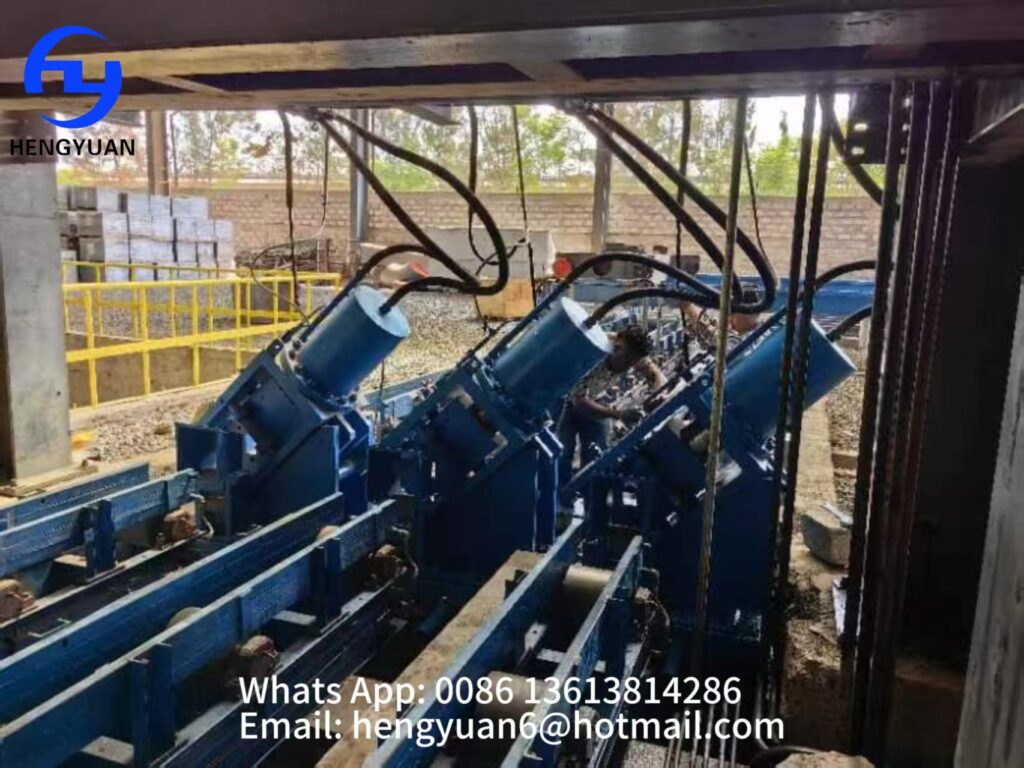
In the continuous casting production of plain carbon steel and low-alloy steel, the billet head cutting process directly impacts the subsequent primary rolling yield and the overall operational cost of the production line. Compared with horizontal shears and vertical straight shears, the 45° diagonal hydraulic shear stands out as the mainstream upgrade solution for casting and rolling lines, thanks to its unique diagonal cutting structure.
1. Core Structural Advantages of 45° Diagonal Hydraulic Shears
- Four-sided synchronous compression cutting minimizes billet deformation
- The equipment adopts dual moving upper and lower blades for diagonal cutting. During operation, the billet bears uniform pressure on four sides, resulting in far less extrusion deformation on the billet head than standard horizontal or vertical shears. Neatly shaped billets feed smoothly into the primary rolling mill, drastically reducing steel jamming and rolling defects, and stabilizing continuous rolling production.
- User-friendly maintenance & less downtime loss
- The cutting hydraulic cylinder is mounted on the top of the unit, enabling quick blade replacement and cylinder overhaul without full machine disassembly, which greatly cuts daily maintenance hours. The integrated support frame can be directly installed on the existing roller bed support without extra civil foundation construction. This slashes construction timelines and eliminates extra investment in civil engineering works.
- Fully automatic hydraulic drive for stable production rhythm
- Equipped with paired dedicated cutting and return cylinders, the cylinders automatically retract right after each cut. The full cutting cycle for a single billet takes ≤15 seconds, perfectly matching the continuous billet output rhythm of continuous casters. The whole system is controlled by Siemens S7-200 PLC, which can link with roller bed length limiters to realize unattended fixed-length cutting.
2. Long-term Operational Cost Advantages

Traditional flame cutting relies on consumables such as oxygen and acetylene, and inevitably causes metal loss and oxide layers on billet cutting surfaces. Cumulative losses of raw materials and consumables drive up long-term operating expenses.
Mechanical hydraulic cutting eliminates all gas consumables and metal cutting loss. Only hydraulic oil and wear-resistant sealing parts need regular replacement. Based on real production data from typical steel plants, the equipment investment can be fully recovered within 12 months through savings on consumables and improved finished product yield. It is a core efficiency & cost-cutting equipment for small and medium-sized continuous casting lines.
3. Technical Specifications & Applicable Working Conditions
- Applicable billet size: 100×100 ~ 130×130 square billets
- Working temperature requirement: Hot billets with surface temperature ≥800°C for online cutting
- Hydraulic system: 31.5 MPa high-pressure plunger pump; two hydraulic oil options – water-glycol fire-resistant hydraulic oil or 68# anti-wear hydraulic oil. Complete cooling and filtering assemblies are included to sustain continuous high-temperature production.
- Modular supply package: Customizable sets for single-strand / two-strand continuous casters, including hydraulic power station, shear main unit, electric control system, full set of pipeline fittings, sealing components and original spare parts, delivering one-stop solutions for new or renovated production lines.
4. Target Application Scenarios

This 45° diagonal hydraulic shear is ideal for steel manufacturers with:
- New small-scale continuous casting lines under construction
- Outdated flame cutting equipment requiring technical renovation
- Square billet rolling production lines undergoing performance upgrades
It balances three core demands for steel mills: upfront civil construction investment, long-term production loss control, and finished product yield improvement, fully compatible with the full casting & rolling workflow of plain carbon steel and low-alloy steel.
Metallurgical equipment is constantly evolving. Low-consumption, low-loss, easy-to-maintain online cutting equipment has become a critical lever for steel mills to reduce costs and raise efficiency.
If you have demands for billet cutting line renovation or supporting equipment for new casting lines, feel free to send me a private message to discuss customized complete solutions.