
Against the backdrop of global carbon neutrality goals, the steel industry is accelerating its low-carbon transformation. As a key link in the production chain, the wire rod rolling line has become a core driver for the high-quality development of the industry through its green and intelligent upgrading. Relying on advanced production line layouts, innovative low-carbon processes and high-performance product systems, we are building a new low-carbon development model for wire rod rolling production through full-process technological innovation, contributing to global climate governance.
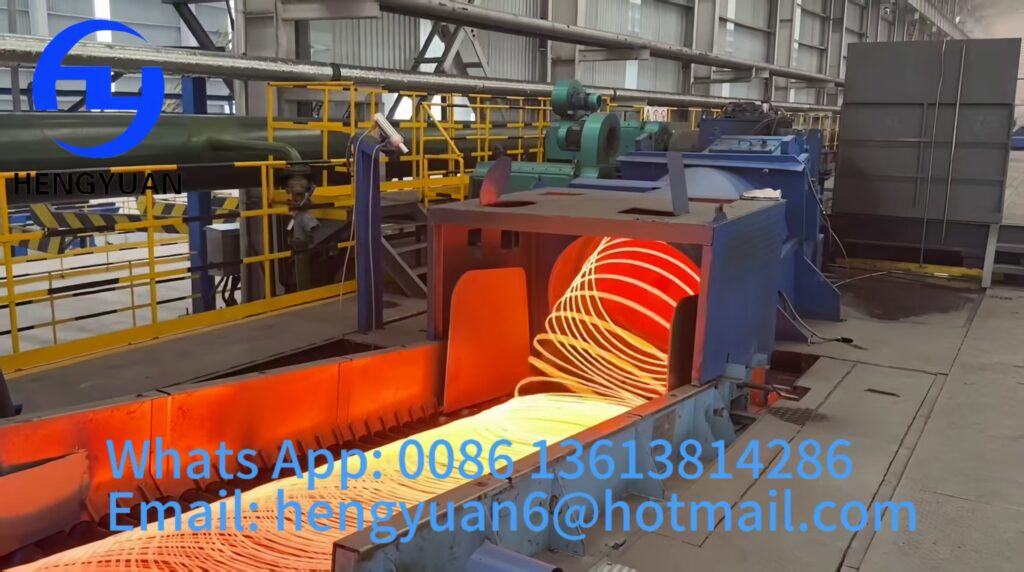
I. Advanced Rolling Line Layout: Laying the Foundation for Low-Carbon Production
We have constructed a comprehensive and high-capacity multi-base wire rod rolling production system, with industrial wire rod production capacity ranking among the top in the industry, capable of meeting the diverse needs of global customers for wire rod products of various specifications.
1. High-Standard Rolling Line Configuration
Wire rod rolling lines adopt world-class equipment and technologies, including imported continuous non-twist rolling technology. Through continuous technological transformation and upgrading—such as replacing short-stress non-stand mills, optimizing pre-finishing and finishing mill units, and expanding air-cooled line capacity—we have significantly improved rolling precision, product performance stability and production efficiency. The newly built high-speed wire rod & large coil composite line can cover the production of small, medium and large-size wire rod coils, further expanding the product supply range.
2. Intelligent Manufacturing Empowering Low-Carbon Rolling
Vigorously promoting the intellectualization and informatization of rolling lines, we have achieved advanced intelligent production line standards. The integrated application of intelligent technologies such as industrial robots (for temperature measurement and sampling, casting operations, wire rod labeling, etc.), intelligent three-dimensional warehouses, unmanned cranes and intelligent control centers realizes full-process quality control from continuous casting billets to coils, as well as automated warehousing and delivery. The billet tracking system and consistent process quality system ensure product quality traceability and contract delivery efficiency, while reducing energy consumption and carbon emissions caused by manual intervention.
3. Continuous Upgrading and Optimization of Rolling Capacity
Through technological transformation of existing rolling lines—such as adding soft reduction to continuous casters, transforming cooling beds, billet grinding lines, and extending the recovery section of rolling lines—we have improved the uniformity of product structure and strength. At the same time, we strictly control key production links: adopting advanced desulfurization and slag detection technologies to improve steel cleanliness; optimizing tundish processes and electromagnetic stirring technologies to reduce billet segregation; and utilizing online surface inspection, magnetic particle flaw detection and other technologies to effectively control surface defects, laying a solid foundation for the production of high-quality low-carbon wire rods.

II. Innovative Low-Carbon Rolling Process Paths: Leading the Transformation of Emission Reduction Technologies
Adhering to the concept of “taking green development as the guide, and realizing the green, low-carbon and harmless steel production process through low-carbon metallurgy and intelligent manufacturing”, we have built a multi-dimensional low-carbon technology system covering raw material selection, rolling process optimization, energy structure adjustment and end-of-pipe treatment, with significant carbon reduction capabilities.
1. Innovation in Low-Carbon Metallurgy Technologies
Focusing on the R&D and application of low-carbon smelting technologies, we promote the development of circular economy by increasing the scrap ratio. Through technological innovations such as scrap preheating and full scrap smelting, we have significantly reduced iron water usage and carbon emissions; the newly added waste heat recovery system for long product electric furnaces further improves energy utilization efficiency. In the medium and long term, we will actively layout near-zero carbon emission technologies such as hydrogen-based shaft furnaces and biomass carbon application, and expand the scale of electric furnace steel production capacity.
2. Improvement of Rolling Energy Efficiency and Optimization of Energy Structure
Committed to building an extreme energy efficiency system, we optimize scrap structure and smelting processes to promote electric furnace energy consumption to meet benchmark standards. The heating furnace waste heat recovery system has been put into operation, significantly saving standard coal consumption; increasing the hot delivery and charging rate of billets greatly reduces energy consumption during the heating process. At the same time, we actively promote the electrification transformation of energy use, add factory roof photovoltaic power generation, implement cast billet oxyhydrogen cutting, and advance the optimization of heating furnace fuels, continuously optimizing the energy structure.
3. Full-Process Carbon Emission Control in Rolling
Based on the LCA model, we have established a product carbon footprint accounting system that can calculate product carbon emissions according to different dimensions, realizing product carbon footprint traceability. For processes with prominent carbon emissions in wire rod production, we implement precise control to achieve refined carbon emission management. At the same time, we actively explore the coupled application of CCUS technology in the metallurgical industry, and layout long-term carbon neutrality technology paths such as green power introduction and flue gas carbon capture, utilization and storage.

III. High-Performance Low-Carbon Wire Rod Products: Creating Value for Customers’ Low-Carbon Transformation
Upholding the product R&D concept of “high strength and toughness, high corrosion resistance, long service life, low carbon and low cost”, relying on advanced rolling technologies, we have developed a series of low-carbon wire rod products to meet the needs of different industries, helping downstream users achieve full-life-cycle carbon reduction goals.
1. Low-Carbon Functional Wire Rod Products
- Simplified Annealing Cold Heading Steel: Through rolling process optimization, the product strength and structure are suitable for direct drawing, eliminating the need for the first spheroidizing annealing process, helping users reduce carbon emissions during heating, save process costs and shorten processing cycles.
- Non-Quenched and Tempered Cold Heading Steel: With excellent cold deformation performance, users do not need to perform annealing and quenching-tempering heat treatment, and it has been mass supplied for multi-grade fasteners. By strictly controlling smelting composition and rolling cooling processes, we ensure the uniformity of structure and mechanical properties of hot-rolled wire rods, which can adjust the strength range according to user needs.
- Ultra-High Strength Cold Heading Steel: Through composition optimization and precipitation strengthening technology, it maintains high tensile strength after high-temperature tempering, with excellent plastic toughness and hydrogen-induced cracking resistance, meeting the high-strength and lightweight needs of key industrial fields.
2. High-Strength and Energy-Saving Wire Rod Products
- High-Strength Spring Steel: Through rolling technologies such as online induction heat treatment optimization and nano-scale precipitation strengthening, we have developed high-strength spring steel wire rod products with high market recognition. While significantly improving strength, it realizes spring lightweight, which is widely used in new energy vehicles, helping the automotive industry save energy and reduce emissions.
- Ultra-High Strength Bridge Cable Steel: Mastering core rolling technologies, we have developed ultra-high strength cable steel, which has been industrially applied in many key bridge projects, providing reliable material support for the construction of super-long-span bridges.
3. Green and Environmentally Friendly Wire Rod Products
- High-Strength Weather-Resistant Bolts and Tie Rods for Photovoltaics: Developing high-strength weather-resistant bolts and tie rods that meet the requirements of bare use and galvanizing-free during the whole life cycle of photovoltaic projects, eliminating the spheroidizing heat treatment process before cold heading, reducing steel use costs and improving product strength and toughness, which have been applied in many photovoltaic projects.
- High-Strength Weather-Resistant Steel Strands for Photovoltaics: Innovating the composition system, adopting low-temperature controlled rolling and cooling technologies to obtain high-strength and tough wire rods that can be directly cold-drawn without heat treatment, with excellent corrosion resistance, fatigue life and relaxation performance, which can be widely used in flexible photovoltaic brackets, mine slope protection and other scenarios.

IV. Leading Low-Carbon Rolling: Shaping a New Industry Ecosystem
We have built a differentiated low-carbon product system covering carbon-reduced, low-carbon, zero-carbon and recycled steel, forming a customized supply model based on user needs. The low-carbon products certified by third-party institutions have the characteristics of high strength, corrosion resistance, low carbon, fire resistance and low temperature resistance, and are widely used in rail transit, construction bridges, marine energy, engineering machinery, automobiles and other fields.
Taking green development as the guide, we will continue to deepen the integration of low-carbon metallurgy and intelligent manufacturing, promote the green, low-carbon and harmless development of the rolling production process, and realize the green and low-carbon development of steel products in the use process through high-quality products. We are willing to work with global partners to jointly build a new net-zero emission carbon cycle industrial chain and contribute to the realization of global carbon neutrality goals.